
Driving Tips
Does Cyprus Drive on the Left? North Cyprus Driving Guide (2026)
Yes — North Cyprus drives on the LEFT, like the UK. A quick guide to roundabouts, road signs and the 5 rules every tourist driver needs before renting.
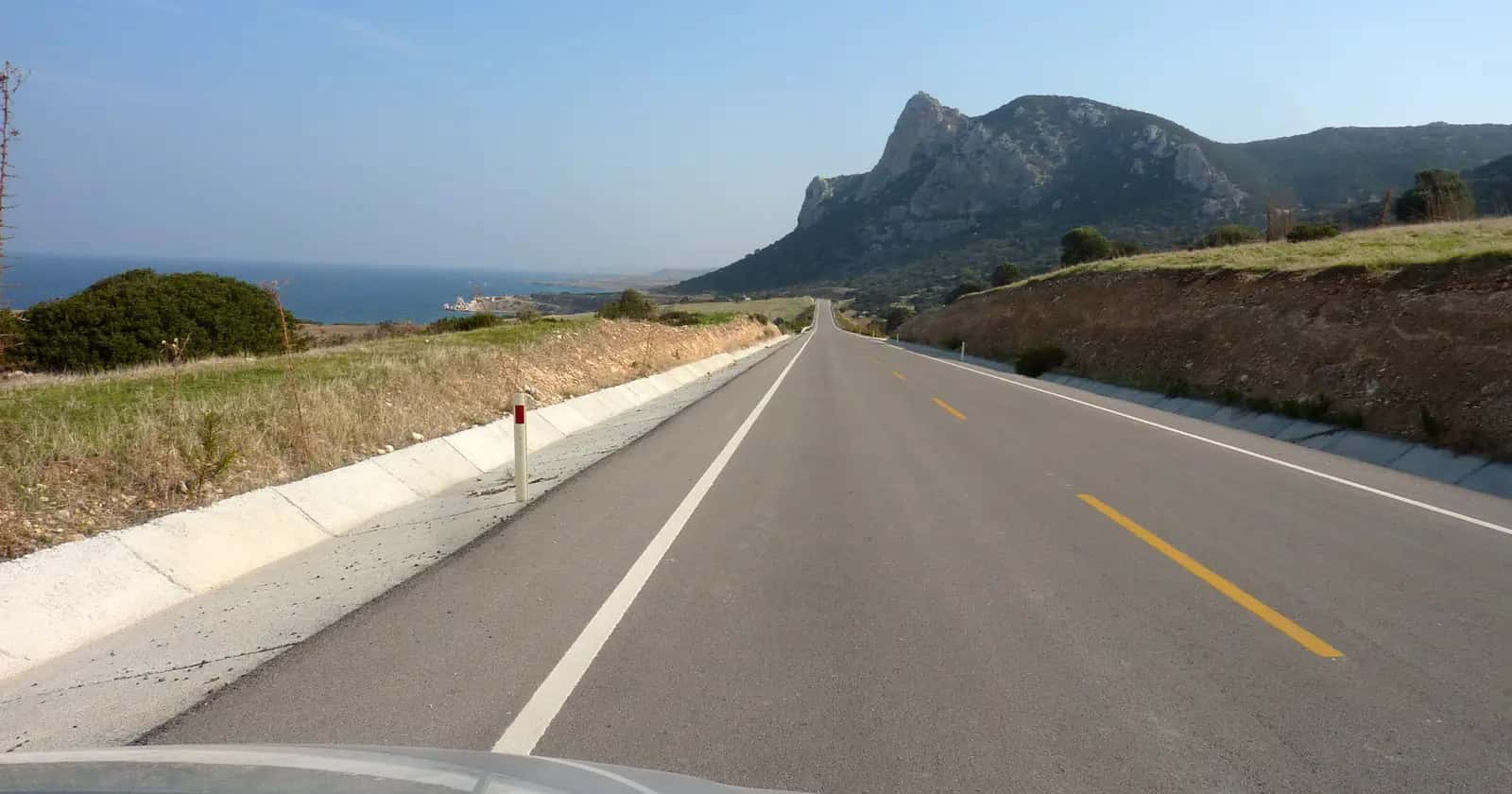
Why TRNC drives on the left, and what it means for tourists
North Cyprus drives on the left side of the road, just like the United Kingdom, Australia and the Republic of Ireland. The British origin is direct: Cyprus was a British colony from 1878 to 1960, and the post-1974 Turkish Republic of Northern Cyprus inherited the British driving conventions along with everything else from the colonial era. For visitors used to driving on the right (most of continental Europe, the US and Russia), the left-side switch is the single most-asked question before booking a rental car in TRNC. The good news is that almost all rental vehicles in TRNC are automatic transmission — the gear-stick-on-the-left challenge that used to make the right-to-left switch difficult is essentially eliminated. The remaining adaptation is largely about lane discipline, roundabout direction and learning to look right-then-left rather than left-then-right at junctions. Most adults adapt within 30 minutes of driving and feel completely natural by the second day. Below are the practical rules and the real-world hazards to be aware of.
The five rules for left-side driving in TRNC
Five rules cover almost every situation. First, drive on the left, overtake on the right. The slower lane is the left lane on a motorway; you move into the right lane only to overtake. Second, roundabouts go clockwise. You enter from the left, you give way to traffic already on the roundabout (which is approaching from your right) and you proceed clockwise around the central island. Third, at unmarked junctions, give way to the right (Continental visitors get this opposite from the rule they're used to). Fourth, on country roads, the centre line is the line you drive on the left of, not the right. Fifth, when reversing into parking spaces, swing the car to the left of where you want to end up, not the right. The single most common error in the first few hours is exiting a car park or petrol station onto the wrong side of the road — concentrate at every exit. Take it slow for the first day; the muscle memory rewires within 24 hours.
Vehicle controls and what's different in a right-hand-drive car
Right-hand-drive cars (UK style — driver on the right) are the standard in TRNC. The pedals are in the same order as left-hand-drive cars (clutch-brake-accelerator from left to right, or just brake-accelerator on automatics). The gear stick is on the left of the driver. The handbrake sits between the front seats. The indicator stalk is on the right side of the steering column on most Japanese-import vehicles (which dominate the TRNC fleet) — the wipers are on the left. This is opposite to UK-domestic cars where indicators are on the left. The first couple of days you may find yourself activating the wipers when you mean to indicate; this is normal and resolves quickly. Mirrors and visibility: the door mirror on your near side (the kerb side) becomes the left mirror in the UK style; you'll find yourself looking the 'other way' at junctions for the first day. All Sur Car Hire vehicles are right-hand-drive; almost all are automatic. Air conditioning, cruise control (where fitted), reverse cameras and Bluetooth controls work the same regardless of drive side.
Speed limits, fines and the police in TRNC
Speed limits in TRNC: 50 km/h in urban areas (cities, towns, villages), 80 km/h on most rural single-carriageway roads, 100 km/h on the new dual carriageways (Lefkoşa-Girne, Lefkoşa-Mağusa, Bafra-Karpaz). Some stretches are 110 km/h-signed. Speed cameras operate on the Lefkoşa-Girne motorway, the Lefkoşa ring road and at several key junctions on the Mağusa highway. Mobile police speed checks are common on rural village exits. Speeding fines are levied on a sliding scale and can be heavy for serious overspeed. Drink-driving is illegal at 0.5 g/L blood alcohol and fines are heavy. Mobile phone use while driving is prohibited. Wearing a seatbelt is mandatory front and back. Children under 12 must travel in the rear; child seats are required for under-3s.
Night driving, animals and other practical hazards
Roads in TRNC are mostly in good condition, but there are real-world hazards every visitor should know about. First, animal crossings on rural roads — donkeys, goats, sheep and stray dogs are common, especially in Karpaz, the Beşparmak mountain villages and the Mesarya plain at night. Slow down at sunset and through villages. Second, narrow village roads — the centre of Lefkoşa walled city, the old streets of Famagusta and most of the Beşparmak mountain villages have lanes that two cars cannot pass simultaneously. Patience and reverse-up courtesy is the local norm. Third, road surface in Karpaz — the main coast road is paved all the way to Apostolos Andreas, but some side tracks become rough or unmade past Dipkarpaz. Fourth, weather — TRNC winters are mild but heavy rain in November to January can cause flash flooding on low-lying roads. Avoid the older mountain road over Geçitköy in heavy rain.